

Yaroslavl Region exemplifies ideal partnership between government and businesses


“The region’s main advantage stems from a balanced structure of its economy and the presence of so-called ‘economic stabilizing industries such as oil processing, machinery production sectors, etc.”
 building, oil processing, chemical, petrochemicals, wood-processing, food industries, etc. Major companies in the region include the Yaroslavl Engine Plant (diesel engines), Rybinsk Engines Plant (aviation engines), Rybinsk Instrument Making Factory and Yaroslavl Tire Plant, which accounts for one-seventh of Russia’s annual tire production output.
Investment policy farsightedness – key to the region’s sterling success
The attraction of direct investments to the Yaroslavl Region’s ecconomy is one of the key aspects of the prgram, ‘Strategy for Social and Economic Development of the Region,’ tasked with laying down the relevant conditions to satisfy all modern business requirements in the region. This strategy, amongst others, envisages the attraction of investments into the region’s car components, engine building, pharmaceutics, petrochemical industry clusters, etc. Other goals of the strategy include the development of building and constrcution materials, creation of the inter-regional customs and logistics complex in the region, etc. For example, the amount of declared investments from the residents of the pharmaceutical cluster exceeded 10.5bln rubles in 2011. Other industrial clusters can also boast of similar or even more ambitious achievements in the sphere of attracting stattegic investment capital.
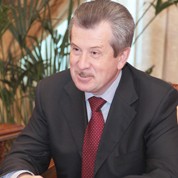
Thus, according to the governor, today over 50 new investment projects, with a total price of several tens of billion rubles, are being implemented in the region, a fact that reflects the overall positive tendencies in the development of the region’s economy. “The total volume of capital investments injected into companies was over 42bln rubles in January-September 2011, which overshot the results of 2010 by 17%. Besides, according to the economic performance results for 2011, the region’s revenue exceeded 30bln rubles,” he adde. “We’ve good potential for further growth of our revenues, a fact which is confirmed by the growth forecasts, where the revenue in 2012 will increase to 35.3bln rubles, 40bln rubles in 2013 and 44.6bln rubles by 2014.
“The region’s three-year budget, adopted last year, envisages further enhancement of the region’s economic potential that will enable it achieve a budget surplus by 2014.”
Thus, commenting on the region’s investment policies, Deputy Governor Igor Elfimov, who oversees the economic issues in the regional government, noted that the latest crisis made the authorities accelerate their work on creating even more comfortable conditions for entrepreneurship, a reality that has turned the business legislations into one of the best in the country. “But the most important thing is that all the changes, such as adoption of the ‘new rules of the game,’ tax benefits and other investment privileges, are fixed in laws, and therefore, do not depend on the personalities of the regional officials that are working in the adminstration today and might be gone tomorrow.”
All these positive trends and efforts turned the region into a default industrial haven for the world’s leading strategic investors. These include the brewing concern Baltic Beverages Holding, the owner of the local Yarpivo brewing company, tobacco concern Altadis, the owner of the Yaroslavl factory, The Balkan Star, American firm, DuPont, a co-investor in the DuPont Russian Paints joint venture. Other investors include the American company, Eastman Kodak Co., a manufacturer of colour photographic paper and photo chemicals, Japan’s Komatsu, the assembler of excavators, French company Snecma, which jointly with the Saturn, makes new aviation engines for the Russian SuperJet aircraft family, German company Metro Group, which owns the Metro Cash&Carry retail and wholesale hypermarket and REAL retail hypermarket. Also in the region are the Luxemburg-based Astron Buildings, the manufacturer of buildings from light metal structures, the Danish company, Velux, the manufacturer of mansard dormer windows and Inpark Group, which owns and manages its subsidiary, the Pereslavsky Technopark, in the region.
Another major growth driver in the economy is the availability of a modern, well-developed transportation system, with Russian and international significance, which comprises the railway, automobile, water and air communication routes to different regions, including the northern and eastern parts of the country. One of the key parts of this transportation system is the regional international airport, Tunoshna, which is capable of serving large fuselage passenger and cargo aircraft, such as Boeing 757 and Il-96 planes.
Besides, the airport also serves regular flights the Dexter air taxi company on the Moscow-Yaroslavl route. The airport’s facilities and potential enable it to relieve the overloaded Moscow air hub, as it helps transport cargo deliveries from the neighbouring regions, such as Vologda, Kostroma, Ivanovo and Tver to other destinations within Russia without passing the capital. The status of a ‘major transportation gate’ constitutes one of the region’s key competitive advantages most adjacent regions, and consequently, it is one of the leading economy growth drivers, including tourism, in the region.
Tourist potential Russia’s ‘Florence’
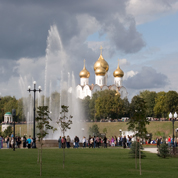 Yaroslavl Region is one of the most famous cultural and historical centers of Russia, which is a part of the world-renowned ‘Golden Ring,’ a cluster of tourist routes across ancient Russian cities that have been able to preserve their unique historical and cultural monuments till modern times.
It is precisely for its abundance of unique objects of cultural, historical, and architectural heritage and other landmarks of high touristic value as well as unique mix of diverse architectural styles that Yaroslavl Region is often called ‘Florence of Northern Russia.’
In addition, the regional government is doing everything possible not only preserve these historical treasures, but also to increase them, disbursing lots of financial resources for this purpose. For example, within the framework of the ‘Regional Special Program for the Development of Tourism and Recreation in 2011-14’ about 2.23bln rubles will be disbursed to the municipal and city’s districts to implement their tourism development programs.
All these unique features have won universal acclaim, as indicated by the inclusion of the historical center of the city of Yaroslavl into the UNESCO World Heritage List in 2005. This fact, together with national celebration of the 1000th Foundation Anniversary of the city in 2010, which was organized on a grand scale, has put the entire region to a new level on the global tourist routes map.
Therefore, it is not surprising that tourists from all over the world frequently come to the region to see the numerous churches and monasteries, masterpieces of architecture from Yaroslavl’s ‘Golden Age.’ For example, Yaroslavl Region, according to 2011’s results, was the first in Russia in terms of the number of attracted tourists per capita, topping the traditional leaders of Moscow and St. Petersburg. Also, the inflow of tourists to the region grew between 2010 and 2011 by one-third to 1.8mln tourists, ahead of the other regions in Russia’s Central Federal District.
The opinion of a strategic investor
Alok Kumar, the CEO of Inpark Group, which owns and manages the Pereslavsky Technopark in the region, highly rated the efficiency of the investment policies being implemented by the regional administration’s economic team. “The positive approach to resolving investment matters, such as the development of clusters, etc., has already impacted greatly on the development of the region’s economy, where such industries as pharmaceuticals, biotechnologies, tourism, automobile components, power industry are booming.”
All these positive trends, the strategic investor noted, have contributed to the fact that today the region boasts one of the highest industrial growth rates in Russia and occupies 4th/5th place in terms of the volume of attracted direct foreign investments per capita in the country. Therefore, it is not surprising that last year the rating agency, Fitch Ratings, raised the region’s long-term rating in foreign and national currencies, from the level ‘BB-’ to ‘BB,’ as well as its long-term national scale rating from ‘A+ (Rus)’ to ‘AA- (Rus)’.




 Web design,