

Kremlin seeking for the best dividends payment formula for state companies


The logic and essence of dividend policies of Russian companies - both public and private - have always been and today still remain specially guarded corporate secrets accessible to only a closed circle of privileged executives. Some companies do longer even bother to explain to shareholders the fundamental principles used in formulating their dividend policies or justify the factors influencing them and the actual sums of dividends paid from year to year.
Here, the shareholders’ status is not taken into consideration or seen as irrelevant by hired managements of such corporations. Consequently, such practices have led to situations, where majority shareholders, such as the state in government-owned corporations, and minority shareholders, notably in private companies, often remain in the dark when determining the amounts of dividends to be paid. But if the views of the minority shareholders, by definition and by law, can always be neglected by the management without “any pangs of conscience,” the same cannot be said of the majority shareholders with the means to drastically change such negative corporate practices. This is exactly the path that the Russian government, which is a majority shareholder in almost all the leading companies in the country, is intent on taking as it does not want to endure such behavior any longer, going forward.
Circumvention of the existing vaguely phrased dividend payment directive
It is a well known fact that the most liquid Russian companies in every economic sector is either 100% directly owned by the state or indirectly belongs to it via affiliated business structures. The government’s shares in the rest companies are also palpable, ranging from blocking stakes, traditionally defined as 25%-plus one share, to controlling stakes of different sizes, varying from 51% to 75%-plus one stock. Hence, almost all the dominating enterprises in the country belong to the state, starting from Gazprom, the so-called "Russian national heritage” to Rosneft and Transneft, etc. in the oil and gas industry. Others include Sberbank and the VTB Group in the banking industry, Rusnano and Russian Technologies Corp. in the field of nanotechnologies and innovations.
“In some cases, even majority shareholders, talk less of minority shareholders, often remain in the dark when determining the amounts of dividends to be paid by the companies.”
Presently, the dividend policies used by state-owned companies are based on a special directive issued by First Deputy Prime Minister Igor Shuvalov. Thus, according to this directive, a state company must allocate 25% of profits for dividends, unless the companies’ internal documents, notably, dividend policy, dictate otherwise. Needless to say here that the existing dividend policies always allow companies to circumvent this vaguely phrased directive. Consequently, state-owned companies in most cases always disburse less than 25% of profits for dividend payments. In most cases, they give up to 20%. However, figures much less than this benchmark are usually allocated for dividends.
By all indications, it seems the Kremlin wants to drastically change the negative status quo. The first step in this direction has been taken as relevant ministries have been tasked with finding the best ways to determine the amount of dividends, based as a percentage of profits or other financial indicators that companies will henceforth be obliged to pay to shareholders. Two similar variants are currently on the table, the only unresolved key issues being the system of auditing to be used as the basis for calculations. Options include consolidated financial statements, audited by the Russian Accounting Standards (RAS) or compiled according to the International Financial Reporting Standards (IFRS), according to representatives of the Kremlin, the government and relevant departments, notably, the Economic Development and Finance Ministries, which oversee the Russian Cabinet’s economic policies.
For example, the Economic Development Ministry has proposed a scheme, under which state-owned companies, along with their affiliated subsidiaries, should pay dividends equivalent to 25% of total income compiled in accordance with RAS. In contrast, the Finance Ministry has proposed a formula linking the sum of dividends to company’s consolidated profit prepared in accordance with IFRS, which will increase the amount of payments.
 The difference in the base used for calculations is huge, depending on the auditing system - IFRS or IFRS - used. This can be illustrated by the example of the financial statements of Gazprom. For instance, the gas monopolist’s gross revenues in 2011, compiled according to RAS, totaled RUR879.6bn, whereas under the IFRS system, this figure increased by almost 1.5 times to RUR1.307trln. Gazprom plans to pay dividends equivalent to 24% of its net RAS-audited profit. However, as indicated above, the amount of dividends will be much higher, if the revenue and profit reports are audited according to IFRS.
Active search for a dividend payment formula acceptable to all parties
Commenting on the progress of ongoing efforts to harmonize the existing different options into a single document, Economic Development Minister Andrei Belousov said that the draft regulation on the minimum amount of dividends payable by the state-owned companies will soon be approved by the Cabinet. "The Economic Development Ministry considers it appropriate for state-owned companies to pay 25% of their operating, rather than net profit, on dividends. The final version of our proposals sent to the government includes a provision to calculate dividends based on gross earnings, excluding assets revaluation figures,” the minister added.
Belousov noted that the Economic Development Ministry believes the parameter to be used is operating profit, but with the exclusion of incomes derived from revalued assets. The second issue, according to the minister, is that state-owned firms often spend a significant portion of profits on co-financing government projects being executed within the frameworks of special-purpose federal programs, primarily in the field of defense. "We believe that this portion of profits should not be included in the dividend calculations," he added. The exclusion of the possibility of assets revaluation, a procedure that could increase or decrease the profit base, is seen as the compromise, which the Economic Development Ministry is ready to make with the Finance Ministry.
However, the Finance Ministry noted that the variant proposed by Economic Development Ministry does not contain provisions for the payment of dividends based on IFRS, that is, it does not take into account the incomes of all members of a business group, including its subsidiaries. "But we think it is right to include these revenues in the consolidated financial statements,” the Finance Ministry noted.
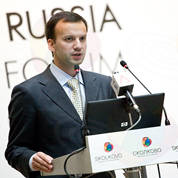
However, Deputy Prime Minister Arkady Dvorkovich, who oversees strategic economic issues in the cabinet, also wants the dividend payment benchmark for state companies to be 25% of net profits. But unlike his colleagues, Dvorkovich does not want this benchmark “etched in stone,” so as to enable companies to decrease it if they are undertaking huge investment activities. "Also, the benchmark needs to take into account the peculiarities and specific activities of such companies. In this context, companies with major investment projects and a high level of debts can lower this bar or even temporarily stop the payment of dividends till better times.”
“Presently, state companies’ dividend policies are based on a directive requiring them to allocate 25% of profits for dividends. Needless to say that companies often circumvent this vaguely phrased directive with a relative ease.”
Russian President Vladimir Putin has also decided to join the search for a better dividend payment formula. Thus, speaking at a session of the Presidential Energy Companies Commission in July, Putin requested state companies operating in the sector explore the possibilities of increasing their dividends. "I would like to draw attention to the issue of the need for more efficient management of companies with state participation. In this regard, I would like to appeal to such companies to seek for additional ways for increasing dividend payments. Promptly heeding the request of the head of state, the company’s principal shareholder, the management of Rosneft decided to disburse additional sum of cash for payment of dividends for 2011 as to bring its gross payments to 25% of its IFRS-audited profits.
Hope on and expectations from the new policy
The activation of the Kremlin and other relevant state structures’ efforts in their searches for the best ways for state companies to regularly pay their dividends within acceptable parameters is expected to create favorable conditions for future increments in the size of payable dividends, not only by state-own corporations, but also by private companies. Such a scenario should help change the current situation in the Russian economy, where the managements of companies, both private and public, have long turned their shareholders' meetings into extravagant corporate parties not for dealing with vital issues relating to their companies, but as platforms for feasting and festivities in the literal sense of these terms.
It has even become a routine for some minority shareholders to view such events not as an opportunity to influence their companies’ corporate governance issues, including dividend policies, but as an occasion that grant them free access to buffets or banquets, which, depending on the financial condition of companies, are traditionally organized in the best hospitality facilities in the country.
In addition to this generous treatment, minority investors also get all kinds of gifts, such as flash cards, handbags with the logotypes and attributes of their companies, and even cakes. Sometimes, these types of gifts are often of more serious concern to the minority shareholders than their companies’ strategic development programs on the shareholders’ agenda. For example, at the recent AGM of shareholders of a major telecoms corporation, several minority investors, according to eyewitnesses, were seen taking 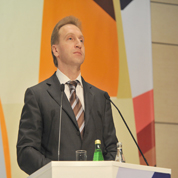 away sandwiches, cakes and all kinds of snacks that were left at the end of the event. At such meetings, only a few shareholders often hear the management’s key development programs for the company, announced at the AGM, whilst even less number is able to professionally comment on them.
Only occasionally, only some minority investor activists with “axes to grant with management” raise rhetorical questions such as why the amount of dividends is always infinitely small, compared to the large salaries and bonuses enjoyed by board members and CEOs, even when the company’s overall financial performance figures in the year under review are miserable. Besides, the number of minority shareholders at this year’s AGMs of state-owned companies, especially those that had undergone the so-called "people's IPO,” became even smaller, following VTB and Rosneft’s buybacks of such investors’ IPO stocks.
It goes without saying that all these activities do not contribute to the growth of shareholders’ activism and their full involvement in the affairs of companies in which they own shares, even although they are a negligible amount. According to the Investors Right Protection Association that coordinates the activities of various groups of minority shareholders in various companies, the number of active minority investors in Russia is very small. This association is only able to influence the managements of companies via consolidation of the minority investors’ shares. However, the association can not help everyone, as it usually works only with minority shareholders, who hold at least 0.1% of their companies’ stakes. Such investors are very few in the country.
This reality has resulted in a situation, where equity investors are either professional players such as state and private companies or their brokers, or the so-called "privatization investors" such as "older generations of Russians or pensioners" who had purchased few shares in companies during the massive privatizations in the 1990s. This is why in today’s Russia, in contrast to the more developed countries, it is difficult to find representatives of the so-called middle class among regular equity investors. Such ventures are currently unappealing to them, and hence, their unwillingness to invest their hard-earned cash into companies, where returns on such investments, in the best case scenario, are comparable to depositing such cash in interest-free accounts. In the worst case scenario, they could just lose the money.
One of the reasons for this dismal state of affairs, again stems from the unattractiveness of most companies’ dividend policies, which allow their managements not pay dividends for years or formally approach the issue, by paying paltry sums that often contrasted against the huge bonuses of the companies’ board members and CEOs. Hence, the only way of this situation is to seek realistic ways to change the negative practice. In this context, the successful implementation of all the Kremlin’s proposed measures to promote the formation of civilized dividend policies for state companies should dramatically change the situation, at least because the vast majority of companies in the country are owned by the government.




 Web design,