

Investors brainstorm over the potential and attractiveness of the Russian economy

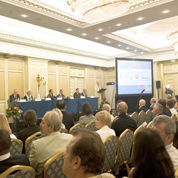
This high profile event, attended by over 300 guests, was held at The Ritz-Carlton Moscow Hotel, was organized by the Gradient Alpha Investments Group with the support of the Russian Union of Industrialists and Entrepreneurs, Russian Chamber of Commerce and Industry and Moscow International Business Association.
Opening the conference in his capacity as the event’s host and organizer, Gradient Alpha Investments Group Chairman Pavel Gagarin defined the objective of the conference as searching for ways to help investors understand the structure of investment risks and minimize them, familiarize companies owners and CEOs with the latest tools for attracting investments, as well as help make sense of the current Russian business legislation as it affects investment activities in the country.
In his presentation, titled, “Managing Financial and Other Related Risks on Investment Projects in Russia,” Gagarin noted the negative impressions foreign investors have about Russian businesses. “Russia has an extremely negative image in the West, as foreign media outlets often portray it as a country embroiled in absolute corruption, criminality and legal chaos,” he noted. “Russia’s most fundamental investment risks, as seen by Western European and U.S. investors, are legal and taxation issues. This stems from the fact that foreign investors often find out that regional legislations are not synchronized with the federal laws, other legal acts contradict one another, whilst in other cases, the necessary federal laws are lacking in a number of areas.”
“Russia has an extremely negative image in the West, as foreign media outlets often portray it as a country embroiled in absolute corruption, criminality and legal chaos.”
Gagarin also reviewed the legislative acts that came into effect in 2012 along with those that will take effect over the coming months and years, analyzing their influence on investment projects in Russia. Citing the results of study done by his company, the expert noted that the current market environment, which is characterized by legislative and regulatory chaos as well as absence of international standards, is a rather favorable time for investments. “The process of investment, irrespective of locations, is always associated with risks as various negative issues, bureaucratic barriers and poorly conceived laws exist everywhere,” he added. Minimizing these risks and evading legal, bureaucratic and administrative obstacles while complying with the law is quite an achievable goal.
Of course, doing so requires commitment of more time and resources, but the end result is worth the efforts,” he added. “If this is not taken take care of today, then aggressive competitors will do so tomorrow, and thereafter will be become more successful in the process than those that fail to act today.”
Speaking at a special session, Ivan Novitsky, the deputy chairman of Moscow City Duma Economic Policy, Science and Industry Committee, highlighted how the City Hall’s recently adopted investment program, titled, “Stimulation of Economic Activity,” will influence businesses between 2012 and 2016. He called on investors and companies CEOs to participate in helping to devise a development plan for the new region of Moscow.
Fielding questions about special provisions to stimulate the influx of investments into Moscow’s economy, he noted that businesses in the capital are hurt by exorbitantly high land rents and workforce. “Moscow clearly needs investments into the financial, tourism and culture sectors, but investments into heavy manufacturing industries will be more effective in the other regions that are far from the capital,” he added. “Moscow needs highly qualified workforce, more effective use of the potential of its higher education and specialized research institutions and companies.”
The conference had three round table deliberations that focused on investments into industries that are most attractive for local and foreign capital; innovative technologies, construction and real estate, agro-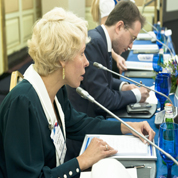 industrial sector and consumer goods market. At the session on boosting investments into innovative technologies, Anton Danilov-Danilyan, the chairman of the Russian Chamber of Commerce and Industry’s Investment Policies Committee, called one of the main conditions for increasing private investments into innovative technologies a departure from an accounting approach to financial planning, strict adherence to the “road maps” laid out in Vladimir Putin’s first decrees and annual publication of key performance indicators. “We should also mention the establishment of a solid system for financially motivating the municipalities to do their jobs, boost resistance to regional favoritism along with appropriate demonopolization of the economy and observance of contractual and property rights.”
Speaking on the same issue, Jean-Louis Truel, a representative of foreign businesses and CEO of International Business Development, noted that an “acceptable environment” for encouraging innovation has been created in Russia, where the number of workers involved in R&Ds is continuously increasing. The country’s funding for R&Ds as a proportion of GDP, though still less than those disbursed for this purpose in other European states, is certainly substantial and backed by a political drive to develop innovations, he added. “However, the return on innovations is significantly less than it should be. In short, the reasons for this being, once again, widespread corruption, poor organization and execution of approved programs and lack of motivation among bureaucrats for the development of innovations.”
Investments into Russian real estate and construction markets are viable ventures, concluded experts at the real-estate investment session. Of these experts, Valeria Mozganova, the real-estate program host on the Business FM Radio Station, noted that 42% of activities in the Russian economy are connected with the real-estate industry. A major trend is the increasing influence of state and governmental structures in this sector, she added. “Also, real-estate developers and investors are forced to work in an environment of continuously changing legislations as the number of new laws and amendments to the existing legal acts come in dozens,” she noted. “These continually changing ‘rules of the game’ are in no way beneficial to investment activity,” she added. “In this context, if the new edition of the Civil Code will not turn the situation on the real estate market upside down, it will surely alter it by 90 degrees.”
A much more upbeat tune was sounded by the conference delegates at the round table on investments into the agro sector and FMCG market, as they noted the rapidly increasing share of domestically produced goods on the Russian market, thanks to significant state support for farmers and public-private partnership projects. Andrei Danilenko, president of the Russian Farms Group and chairman of the National Dairy Producers Union, said Russia was no longer fully dependent on imports in certain economic sectors, notably poultry, hogs and sugar production, statement that made the representatives of the FMCG sector at the session envious of the level of the state support for the agrosector.
“Investors are forced to work in an environment of continuously changing legislations as the number of new laws and amendments to the existing legal acts come in dozens. These constant changes to ‘rules of the game’ are in no way beneficial to investment activity.”
According to the data provided by Ilya Belonovsky, the executive director of the Association of Retail Companies, the Russian consumer goods market has yet to reach even half of its inbuilt potential. “In the near future, the volume of investments into the development of this sector is bound to significantly increase, the returns on investments are not expected to decrease soon, while retail chains will continue to grow and consolidate along European lines,” he added. “It will take about 20-25 more years before Russia can reach the typical European level of retail market chains saturation,” he noted. “At present, retail chains occupy just about 38% of the Russian market, while the five largest players control just 10% of the market. By way of comparison, the five largest retailers in Germany control almost 70% of the market.”
Irina Sheshero, the president of the National Investment Association, highlighted the key features that investors want to see projects to warrant their capital infusions. “There are always investors for all projects, but the most important thing is for those who seek investors to clearly and accurately specify their needs and precisely specify under what conditions such investor can enter and exit the project in the future. “In the first place, it is essential to state clearly who will run the project - an existing business or a company specially created for this purpose,” she added. “And, secondly, one should set out the degree of the project owner’s participation in its financing, notably, the amount to be contributed from own funds, the ownership structure and how it will change if strategic investors are attracted on board. Other key considerations are sales, sales outlets and project’s profitability targets.” (For other factors, see Important Information for Investors in a Project)
Stanislav Martyushev, the CEO of Interfax Business Service, provided an analysis of the Russian experience in creating a liquid secondary equities market, calling “limited equity liquidity” one of the biggest obstacles to investments into Russia’s listed companies. “Only 30 out of 322 corporate equities traded on the Russian market that we studied were liquid. In other words, this means that investors’ options are limited to only these 30 equities,” he said. “Indeed, there are whole segments of the Russian economy, where there are simply no liquid equities.” (see Factors influencing equities liquidity).
“Only 30 out of 322 companies’ equities traded on the Russian market are liquid, meaning investors’ options are very limited. Indeed, there are whole segments of the Russian economy, where there are simply no companies with liquid equities.”
As ways of rectifying this rather ‘pathetic situation,’ Martyushev recommended listed corporations to work continuously on strengthening the liquidity of their shares/Depositary Receipts in a systematic way rather than doing so only when “the next deals are on the table.” He also recommended including the equities liquidity level as one of the key indicators of the effectiveness of investor relation (IR) services. “In devising an IR strategic plan, efforts to increase securities liquidity must rely on the results of an analysis of the best global practices in this field as well as taking into account companies’ key competitors’ activities aimed at securing capital.”
Rounding up the event, Gradient Alpha board chairman said the East+West = Invest Conference participants’ constructive proposals and interesting ideas would be useful for developing the best practices that will help improve Russia’s investment climate. “Using these recommendations, the Moscow City Duma Legislative Committee’s Expert Council, which is headed by me, will work out legislative initiatives and proposals for modernizing law-enforcement practices,” he said. “This will help create favorable conditions for executing investment projects and attracting foreign capital to the Russian economy.”
Gradient Alpha’s press department helped in the preparation of this article




 Web design,