

Kremlin’s amusement park to challenge Disneyland in global recreational services

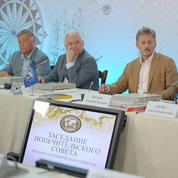
“This project, currently known by its working title, Russia Museum Park,’ will become one of the main touristic landmarks, able to attract and accommodate up to 10mln visitors per annum,” noted Sergei Shoigu, the governor of the Moscow Region, who also holds the position of the President of the Russian Geographical Society (RGS), the author of the project.
“We truly have things to showcase, not only to foreign tourists, but also to our citizens,” the governor said, whilst presenting this ambitious, mega-project, valued at RUR50bln at the meeting of the RGS’s Board of Trustees that was attended by the Russian political and business elite. In particular, personally present at the meeting to listen to the presentations made by the governor and other top Moscow Region representatives were Russian President Vladimir Putin and several titans of Russian capitalism, who, in all likelihood, will probably foot the lion’s share, if not the entire cost, of the Kremlin’s new pet project, which, according to the governor, will become “a special object of national pride” for the Russian people.
The Project receives approval at the highest political level
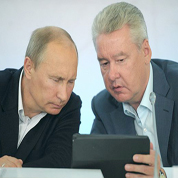
Expectedly, captivated by the idea, Putin expressed his support right at the meeting, noting that such open-air park museums in other countries do not only serve purely entertainment purposes but also have important educative missions. “We are talking about a nationwide project in the full meaning of this term, which is aimed at building a park that will accommodate all exhibits from all Russian regions,” the president noted, whilst addressing the meeting of RGS.
“Russia, with its unique nature, millennia-old history, ethnical diversities and cultural varieties, is truly capable of demonstrating interesting aspects of life, not only to citizens, but also to tourists."
“This park will give visitors the opportunities to familiarize themselves with nature, Russian traditions, cultural heritage and unique architectural masterpieces that will embody the entirety of the Russian Federation,” he added. “Russia, with its unique nature, millennia-old history, ethnical diversities and cultural varieties, is truly capable of demonstrating several useful and interesting aspects of life, not only for our citizens, but also for our guests.”
According to the Moscow Region governor, the park will feature exhibits from Russia’s entire area of 17mln sq. km of its historic, natural and cultural mosaics that form the overall image of the country. “Shortly put, this park will be a miniature copy of our country, where one can climb up the Elbrus Mountain, cross the Yenisei River, take part in polar expeditions or archeological excavations; undertake a bicycle tour from Vladivostok to Kaliningrad, spend a night, camping on the Kamchatka Island or the Usuries Taiga.”
The estimated number of 10mln people the park will be able to attract annually has been determined from ‘a most conservative-case scenario’,” the Moscow Region authorities said, adding that they fully believe that in reality, especially after the park's commissioning, the number of tourists will be a lot greater. “Moreover, the location of the park in the vicinity of the Domodedovo Airport will, on one hand, ensure easier transportation accessibility to the facility, while, on the other hand, it will enable airline passengers to get a bird’s eye view of the entire park,” Shoigu added.
The image of the Russian Federation in the park will be perceived in all its entire entirety from certain observation platforms and also from landing and ascending airplanes at the Domodedovo Airport, the governor added. “Thanks to this possibility, the image of Russia should invoke only exceptionally positive sentiments in all people that will observe our country from a “bird-eye” perspective,” he noted.
 An ambitious, mega-project with an over RUR50bln price tag
According to Dmitry Kurakin, the deputy chairman of the Moscow Region Government, the estimated cost of creating the park currently stands at RUR50bln. Of this sum, almost RUR20bln will be spent on the creation of the scaled-down miniature model of Russia, and about $30mln per annum will be required for its operation. “This is a huge capital-intensive project, and therefore, we do not expect only private investors to fund it, as state’s financial involvement will also be required.”
That the role of large-scale Russian businesses in the implementation of the project will be significant, or even decisive, at least as far as funding is concerned, was almost a done deal. This was later officially confirmed right at the meeting, when the Moscow Region authorities declared that billionaire Vasily Anisimov, the owner of Coalko, a company that owns about 20,000 hectares of land in the region, was ready to grant up to 1,000 hectares free-of-charge for the park’s development (for more on Anisimov’s generosity, see below).
According to the plans, the park’s central section, provisionally called “The miniature copy of Russia”, will cover about 300 hectares, which can be expanded to 1,000 hectares. “The whole territory of Russia will be reproduced with high degree of accuracy,” Kurakin said. Apart from this, the project stipulates the creation of several complexes within the park, including the museum and exhibition complex that will unite Russia’s numerous architectural masterpieces and sculptures, he added. “The ethnographical complex will become a platform for intercultural exchange.
Also, the amusement and adventure parks and a safari park, reproducing the natural habitats of animals, are also on the agenda. “This park will become an object of national pride and one of the main tourist landmarks of Russia,” Shoigu reiterated time and again during his presentation. And, echoing his boss, Kurakin noted that the project goes beyond the framework of a standard weekend entertainment park, and thus, can become an independent center for attracting foreign and domestic tourists. “We believe that the presence of such a park will, on its own, become a sufficient reason to visit not only Moscow and the Moscow Region, but also Russia as a whole, and remain in the country far longer than traditionally provided for during regular tours.”
Expectedly, the RGS Trustees Board offered Putin to head the panel that will select the design of the park’s architectural and artistic composition via a tender. The president approved the idea of holding a tender. “The idea of holding a tender is good. The implementation will be complex; and we understand the magnitude of the project."
“This project goes beyond the framework of a standard weekend entertainment park, and thus, can become an independent center for attracting foreign and domestic tourists.”
The Moscow Region authorities plan to arrange the tender within year, and use the result to select the partner that will oversee the fund raising, construction design, and run the park for 25 years, and then transfer into government ownership. The park’s architectural and artistic concept tender could be announced as early as Oct. 1, 2012.
Billionaire landowner’s generosity is an investment in disguise
Anisimov’s readiness to freely give up his land for this project surprised even Putin, who deemed it necessary to ascertain whether the ‘gift’ had been voluntary. However, it seems that Anisimov, who is rated 30th in the Forbes Magazine list of Russian billionaires based on 2011’s incomes, is always ready to offer his land to implement any government’s initiatives. For example, in May, the billionaire landowner offered Kremlin, currently searching for a territory to accommodate offices being relocated from the center of the capital, his plots of land. The billionaire specifically noted that he was ready to give them for “a symbolic price.”
Fast-forward to August: as soon as the authorities proposed a new initiative, again, the billionaire was ready to cede his land to the state to implement it. Such “operative readiness,” according to political observers, stems from the fact that most of the billionaire’s lands are located outside the new Moscow, which significantly makes them cheaper. Consequently, he has been lobbying for their inclusions into the territories of the new capital.
However, it is doubtful that the boundaries of the new Moscow would be specifically extended, even for the sake of a billionaire. Therefore, the location of federal government’s objects — be it a new complex of government offices or the Kremlin’s new open-air amusement park pet project, seen as response to Disneyland’s hegemony – on this land, is capable of given it a new special and higher status. Therefore, gifting 1,000 hectares to the government is not just only a ‘philanthropic gesture,’ but also a move that in perspective would pay off over 1,000-fold. From this point of view, the unbelievable generosity of the billionaire landowner can be considered as a very profitable investment project.



 Web design,