

Lots of foreign investors "still actively operating" in Russia, despite 3,000+ illegal western sanctions against the country

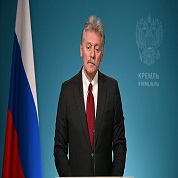
Many foreign investors and companies are still operating in Russia, despite several thousands of western countries' illegal comprehensive pan-economic and financial sanctions agaist Moscow, several top Russian Government offcials, including Dmitry Peskov, the long serving Kremlin and Presidential press secretary, and major local corporate executives said, citing different data from multiple sources, including the official statistics from the St. Petersburg International Economic Forum (SPIEF) Sochi Investment Forum, Eastern Economic Forum and other major local and international business conferences held in Russia in recent years, as clear examples confirming these positive trends in the country and its economy. “These business forums and conferences have long since established themselves as globally renowned economic events and business gatherings of top Russian and foreign governments officials, local and international corporate executives that are eagerly awaited not only by key local investors in Russia, but also by major international investors and business tycoons, the officals and business executives noted. "Despite all the illegal sanctions imposed on Russia by western governments, the international business community has largely continued to maintain its presence and operate on the Russian market,” Peskov added.
Some Western companies left the Russian market in an “absolutely disgraceful” manner in [protests against the launch of Russia’s Special Military Operation (SMO) in Ukraine] in early 2022. However, there are also those that have continued to operate in Russia, Peskov stated, without stating concrete examples for obvious reasons. "We, as Russia, are interested in the flows of foreign capital and investments into our market,” he noted. According to many local and foreign experts, over 2,100 international companies of various sizes and types are operating in Russia today, despite these sanctions.
This figure includes about 300 companies from the US and several hundred others from the EU and their global allies, such as the UK, Canada and South Korea, whose governments have adopted a more aggressive stance against Moscow due to the war in Ukraine. The Kremlin has now officially designated these countries as “non-Russia friendly “states or governments” due to their coordinated, collective aggressive sanction policies, as well as their openly hostile behaviors and actions against Moscow on the international economic, financial and geopolitical arenas.
According to various experts’ sources and data, the largest foreign corporations continuing operations in Russia, categorized by sizes of revenue volumes and industrial niches, include China’s Chery Motor and Great Wall Motor (automotive); Japan’s Tobacco International and US’ Philip Morris International (tobacco); US’ PepsiCo and Switzerland’s Nestle (food industry); France’s Auchan and Germany’s Metro Group (retail), as well as various companies from Turkey, India, and other countries across Asia, Africa, the Middle East and South America. The global corporations, still operating in Russia, have long ago fully adapted to the sanctions-related restrictions and their complementary challenges on the localmarket, and have continued to generate significant profits. Meanwhile, many companies that hastily exited Russia in 2022–2023, now recognizing the scale of lucrative opportunities in the Russian economy, are actively planning or seeking various legal or quasi-legal methods and workaround schemes to return to the Russian economy, while new investors have expressed their intentions to enter the Russian market.
The approaches being considered by both groups include establishing networks of affiliated distribution firms and incorporating various types of subsidiaries or intermediary business schemes under different brand names in Russia or third countries with direct access to the Russian economy. These companies’ desires or intentions to return to Russia resonate with local citizens, more than 50% of whom, according to various experts marketing studies, are anticipating or in favor of the returns of the foreign brands that had left the country and debut of totally new companies in Russia, especially at the end of the war and revocations of all sanctions.
Factual agreegated losses from foreced mass exodus of foreign investors from Russia
Various experts have estimated the financial and economic cost to Russia resulting from the departure of foreign companies and investors, especially those from western countries, at nearly 3.4% of Russia's GDP, which is equivalent to 3.7tln rubles ($47.5bn or €41.7bn). These multitrillion ruble losses encompass both direct financial losses, such as those stemming from the unilateral terminations of multibillion-dollar commercial contracts, withholding or non-deliveries of prepaid, but now sanctioned goods and services, and indirect losses.
The latter include the loss of direct access to markets of western countries and their allies and their cutting-edge technologies and financial services, as well as those resulting from the abrupt disruptions, complications of the previously existing goods delivery logistics networks and longer travelling arms of the new supply chains and distribution outlets.

On the other hand, the aggregate losses incurred by foreign businesses, specifically those from so-called “unfriendly countries,” exceeded $600bn. The direct losses suffered by the exited companies and investors from the “unfriendly countries” alone, including from their multibillion corporate assets write-offs, “fire-sales” of their profitable businesses at high discounts and huge payments for fines for their premature unilateral revocations of bilateral investment agreements with local partners and pre-term country-exit penalties levied against them by the Kremlin, have been most conservatively estimated at over $100bn.
According to experts, these losses include, amongst others, the financial damages incurred by the companies that completely physically exited Russia; by foreign investors who either voluntarily fully bankrupted and/or partially reduced their shareholdings in their profitable businesses as part of the global business elite's show of solidarity with Kiev and/or were forced to sell their companies at nominal valuations, with no legally binding buyback options, due to the Kremlin’s counter-sanctions, which have made their operations in the country extremely difficult or outright impossible.



 Web design,