

Key Russian financial industry players discuss the “present and future” of the country’s debt market

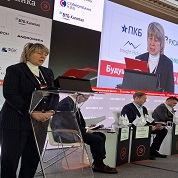
Key players in the Russian financial industry — including bond regulators, bond issuers, investment bankers, brokers and sector experts — discussed the current and future trends on the Russian bond (debt) market at the eponymous forum, held on October 21 at The Ritz-Carlton Hotel, in downtown Moscow.
This forum, titled, “The future of the Russian bond market,” was organized by Expert RA JSC. Founded in 1997 and accredited by the Central Bank of Russia (CBR), Expert RA is currently the oldest and largest credit rating agency in the country.
The forum’s plenary session, titled, “What to do when risks are rising and the interest rates are not falling?”, featured the following participants: moderator Pavel Mitrofanov, CEO of Expert Business Solutions; Marina Chekurova, the Expert RA CEO and management chairperson; Alexei Yakovlev, Russian Finance Ministry’s Financial Policy Department director; Alexei Kupriyanov, Sinara Investment Bank’s corporate & investment banking director; Mikhail Avtukhov, Sovcombank Management Board deputy chairman; Maria Khabarova, the head of the investment banking unit at VTB Capital Trading; Denis Shulakov, Gazprombank’s first vice president and head of its capital markets division; Anton Malkov, T-Bank’s capital markets division managing director; Gleb Shevelenkov, Moscow Stock Exchange’s bonds market director and Miroslava Sergeenko, the founder and president of the Oncologica Charity Foundation and also the chairperson of the Oncologica Endowment Fund Trustees Board.
Opening the plenary session, Chekurova said the Expert RA’s forum has, over the years, earned a reputation as one of Russia’s most authoritative platforms for open discussions among the country’s financial markets regulators, bonds issuers, bonds placements organizers, institutional and retail investors. The forum brings together representatives from 110 current issuers and 50 potential bond issuers, who collectively account for about 22trln rubles in outstanding bonds, she added. "We live in an era of rapid changes on the financial markets and I hope this forum serves as a starting point for the year ahead."
The Russian bond market: its present & future
Kicking off the discussion and the subsequent brainstorming exchanges of views and opinions among the plenary session participants, moderator Mitrofanov presented the results of a new study on the bond market, conducted by the Expert RA analysts and released as a part of the forum’s major business events. Specifically, he noted the Russian bond market grew by 6.2trln rubles in the first nine months of 2026, a figure projected to grow further to almost 7.7trln rubles in 2027, while the bonds share in the country’s overall total corporate debt has reached a record high of 31%. Russian businesses are facing serious challenges, which have caused the share of unprofitable companies to rise from 28% to 34%, while the net financial result has fallen from 15trln to 12trln rubles, Mitrofanov continued. The so-called “scissors” effect — the widening gap between profitability levels and interest rates — continues to exert pressur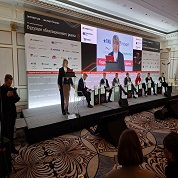 e on the real sector. Furthermore, the need to service high-cost market debt is leading to delays in payments to counterparties, who in turn, are also deferring their own operational payments due to a lack of liquidity, which creates a risk of a cascade of defaults, he noted.
The total volume of the Russian debt market — including related structured investment products and other financial instruments — stood at the end of September 2026 at 75.74trln rubles, as per Cbonds, citing the latest financial data from the Russian Central Bank and leading analytical agencies. Of this sum, the corporate segment accounted for 31.4trln rubles, while the aggregated debt of the country’s largest enterprises grew significantly throughout the year to peg at a record of 31% of the total corporate debt. The public sector segment — comprising both the OFZs (federal loan obligations) and other government bonds — was valued by Expert RA at the end of September 2026 at 34.06trln rubles, while the valuation of the "replacement bonds market" stood at 2.96trln rubles. The bulk of the market volume and its growth in 2026 are driven by the most reliable bond issuers — those with double AA and triple AAA category ratings, while bond issues with lower ratings are forced to reduce their presence on the market due to stringent funding conditions and offers that are less attractive to investors.
Regulators’ views & market players’ opinions
In his remarks, Finance Ministry’s Yakovlev highlighted the growth of the corporate and sovereign segments of the public debt market. Regulators are well aware of the strengthening of the retail demand and its increasing role across all the bond market’s niches — a trend that necessitates the adjustments in the practices of bonds issuers and bonds placement organizers, as well as in the regulatory framework. Retail investors must be nurtured and protected; all investors need to be confident that they are receiving a fair return and that their rights are safeguarded, rather than being viewed merely as a source of liquidity to be tapped during  difficult periods, he noted. Moscow Stock Exchange’s Shevelenkov said the current business model — in which retail investors have become the primary driver of the bond market — is showing signs of overheating and, consequently, vulnerability. The much-touted oversubscription, once a point of pride for bond issuers and placement organizers, is steadily declining, signaling a drop in actual demand, he added. At the same time, the bond market is becoming less concentrated, he noted, calling this trend a positive development in the financial industry. Sovcombank’s Avtukhov pointed to a sharp increase in the overall market volume — particularly in primary bond issues — even though the expectations of a possible decline in the cost of funding did not materialize. On the other hand, the shift in the CBR’s monetary policy trajectory has significantly impacted the debt volumes and will continue to exert a restraining effect for some time, he added. "The reality is that consensus forecasts are almost always wrong, so you should always have a second, third, and even fourth plan in place," he advised.
Khabarova focused her remarks on the hidden threats negatively affecting the development of the bond market — such as the prolonged period of high interest rates, which has significantly weakened the credit quality of a substantial number of bonds issuers. A potential for practical migration of ratings — from the AA+ category to A, and from the A+ to the BBB category — is already becoming apparent, the VTB Capital Trading executive noted. There is also the risk of a critical decline of operations on the secondary liquidity market, a situation exacerbated by the record volumes of offers on the primary market, she added. Kupriyanov, addressing the audience, pointed to the serious systemic problematic issues faced by corporate borrowers that had primarily targeted mostly retail investors or individuals. The absence of partner banks willing to financially support bond issuers during bond offers amidst a background of critical liquidity crunch has led to an inevitable series of defaults, which are now escalating into cases of complicated business restructurings and bankruptcies. Many bonds issuers were simply not prepared for such situation, the Sinara Investment Bank executive added. Gazprombank’s Shulakov devoted his commentary to the growing polarization of the debt market and the declining quality of bonds issuers in the BBB- category, describing this as an obvious and logical development that market participants have yet to learn to navigate constructively. Nevertheless, despite these objective challenges, the market continues to generate innovative products, adapting to the new reality, he noted.
Malkov, the T-Bank capitals market manager, said the most significant systemic problematic issue on the Russian bond market today  stems from the defaults in bonds in the A rating category, rather than from the so-called high-yield bond operations. To survive in the current debt market environment, he advised potential bonds issuers to actively use all the available bond market opportunities — such as engaging more closely with banks and pursuing syndicated bond placements —to secure refinancing. Malkov also specifically urged investors and bonds issuers to pay more attention to the so-called "digital financial assets" (DFAs). The recently adopted regulatory changes have reduced the tax inefficiencies previously associated with these financial instruments, potentially making them an attractive new form of debt financing. "In an environment of limited liquidity, short-term borrowing opportunities — such as those offered by the DFAs — are very useful," he added. All the speakers and experts, albeit with varying caveats, were unanimous in their positive outlooks on the current state and future trends of the Russian debt market. Specifically, they rated the market’s overall stability — on a scale from one (the lowest) to five (the highest) — at a “solid 4, or even 4+.”
The socio-medical aspect of the forum
A socio-medical dimension of the forum was the primary focus of the presentation by Sergeenko, the founder and president of the Oncologica Charity Foundation. Specifically, she said the foundation has already provided medical treatment and other related assistance to 65,000 adult cancer patients and called on new partners and forum attendees to join and participate in the foundation’s vast charitable programs and activities She concluded her remarks by inviting all the Expert RA’s forum delegates and participants to the 5th Oncologica Foundation Forum, titled “Investments in life,” which will take place on November 24 this year.
by Christopher Kenneth and Irina Kozlova









 Web design,