

Windfall profits tax payment could pose problems for most Russian companies

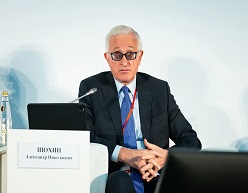
If a tax is introduced on the so-called windfall profits, generated from the sudden favorable conditions in the Russian economy, it should be done only on a targeted basis, because not all companies, currently earning such profits, will be able to pay such tax, Alexander Shokhin, the president of the Russian Union of Industrialists and Entrepreneurs (RSPP), said.
The RSPP is a major highly influential business lobby group that promotes the corporate and other related interests of the largest companies and business owners in the country. Most companies and economic sectors do not generate the excess profits on which such a tax is levied, because only certain types of economic activities are consistently demonstrating not only high profitability, but also positive growth dynamics in their financial reports, Shokhin noted, as per Vesti, a local media outlet. Besides, these favorable conditions, including those caused by the crisis in the Middle East and associated global market volatilities and high prices for goods and services, are temporary in nature, he added.
Therefore, any decision regarding such tax should have a limited, or pinpointed, scope of application, as it cannot be used as a general fiscal policy across all the key sectors of the economy, because the favorable conditions favoring windfall revenues generation, do not exist in all industries, the RSPP president said. This is why before levying an excess windfall profit tax, it is important to first create long-term conditions, conducive for stable profit growth, for companies and industries. Such conditions include, amongst others, the devaluation of the ruble and the reduction of the Central Bank of Russia's (CBR) key financing rate to a single digit, he added. The current key financing rate, set on March 24, 2026, stands at 15% per annum, as per the CBR’s data.
It is important that any decision on taxation should not, in any case, lead to a situation, where companies are forced to take bank loans to pay such tax, the RSPP president noted. Serious discussions are needed before introducing an excess windfall profit tax in the economy, but such discussions are currently not being held, he added.









 Web design,