

IBA President: “Our modern world needs genuine win-win diplomacy, not egocentric sanctions driven policies”

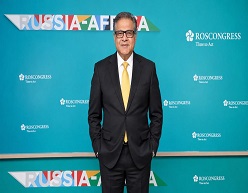
Addressing the Russia–Africa Economic and Humanitarian Forum in Moscow, one of the multiple business activities and events that complemented the recently concluded high-profile Russia–Africa Summit that brought an overwhelming majority of African countries leaders at the end of October to the Kremlin and other major historical venues across Moscow to engage and interact with their Russian counterparts on geopolitical issues and economic and investment cooperation agenda, Sammy Kotwani, the president of the Indian Business Alliance (IBA) and vice chairman of the Business Council for Cooperation with India, said today’s world needs genuine, win-win diplomacy, not egocentric sanctions driven policies that have become the bedrock principle of some powerful countries’ default strategic modus operandi in dealing with other nations.
This Russia-Africa Summit is aimed at achieving, amongst its core objectives, this strategic mission, Kotwani continued, calling the summit and forum, held on October 28–29, 2026 at Moscow’s historic Gostiny Dvor, “the most important international gatherings taking place in the world today.” The forum’s significance extends beyond conventional diplomatic and commercial discussions, as it examines how countries can build a more sovereign international economic order based on equality, mutual respect and practical cooperation, Kotwani noted. “The official program includes sessions such as “Economic Cooperation between Russia and Africa: The Path to Equal Partnership”, “The BRICS Platform as a Catalyst for Russian-African Business Cooperation”, and “The Russia–Africa Agro-Industrial Alliance: Meeting the Challenges Together.”
Among the subjects discussed were the prospects for a free trade zone between the Eurasian Economic Union and the African Union, international settlement mechanisms that do not depend on the US dollar or euro, energy and nuclear cooperation, transport corridors, artificial intelligence, space technology, public health, education and media partnerships, Kotwani said. These discussions concern the practical foundations of economic sovereignty and long-term development. “Today, we live in a twitter world, but that is not how true bona-fide democracy should work in practice,” he added.
Twitter-era coercion diplomacy
Commenting on the current international environment, Kotwani pointed to the current practice where a certain president can wake up in the morning, announce some unjustified sanctions through a social media network against another country or countries, thus suddenly forcing millions of ordinary people, businesses and financial institutions across the globe to manage the resulting negative consequences “a coercion, not diplomacy” international and bilateral issues. “Real diplomacy means sitting together with counterparts, respecting each other’s sovereignty, understanding differences and finding truly realistic solutions to those differences through dialogs and good-faith discussions.”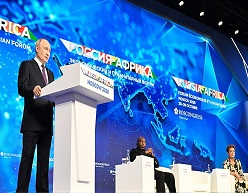
Kotwani said, “this is precisely why I consider the Russia–Africa Forum so important.” The time has come for countries to come together around a different approach to international relations — one founded on mutual respect, sovereign equality and economic cooperation, he continued. “Russia is playing a very important role in bringing together nations interested in developing such partnerships.” Kotwani believes Russia, India, other BRICS+ members and African countries have enormous potential to strengthen trade, technology, infrastructure and humanitarian cooperation. “I firmly believe that the future of international relations should be determined not by sanctions and unilateral pressure, but by dialogue and practical cooperation.”
Discussions language and tonality also matter
Kotwani also noted the language and tonality of the discussions among the forum’s delegates, adding these traits also matter a lot in international diplomacy and other forms of interactions among different peoples, countries and nations. As an example of this linguistic aspect of the forum, Kotwani noted the bilingual presentations of all the forum’s programs, with Russian placed first, ahead English, now in the second spot. Traditionally, the reverse was the norm in such events in Russia and across the world.
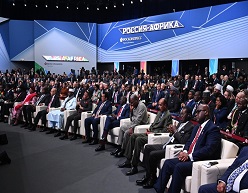 Specifically, Kotwani called the Russian language prioritization “highly symbolic of the now much broader geopolitical shift that highlights the practice where most countries participating in major international political and economic events are increasingly seeking to shape their own international conversations along national identities and practices rather than relying exclusively on the previously established western platforms that are fundamentally aliens to their countries’ political, social and cultural national behavioral codes, perspectives and conducts.
by Christopher Kenneth




 Web design,